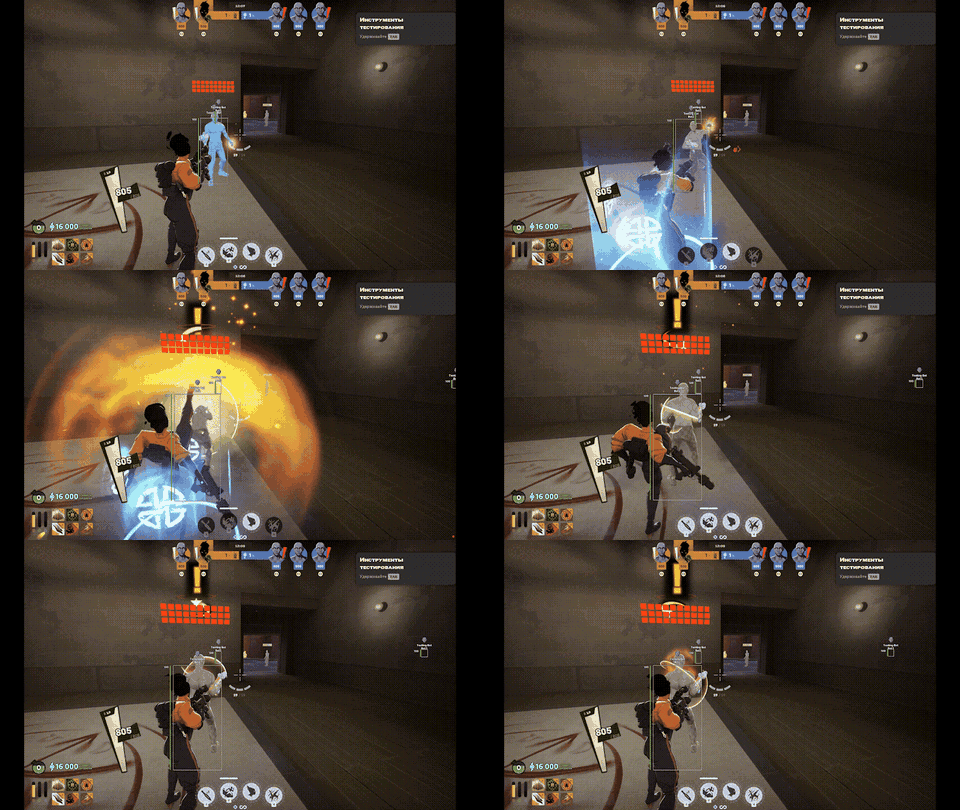
A Deadlock souls aimbot can help move the crosshair toward a soul orb. A soul triggerbot can handle the shot once the orb reaches the crosshair. Soul ESP highlights the orb so it is easier to track. Those are three different actions, even when a cheat menu groups them under one “souls” heading.
The distinction matters because product descriptions do not always use the same labels. One developer may call a firing-only function “Soul Aimbot,” while another reserves that name for visible aim movement and lists the automatic shot separately.
Follow one soul orb from spawn to shot
When a trooper dies, its soul orb rises for a short contest window. Following that single orb makes the feature roles clear:
- Soul ESP marks the orb or adds information around it.
- Souls aimbot moves the crosshair toward the orb according to its FOV, speed or smoothing settings.
- Soul triggerbot fires when the orb is inside the configured crosshair condition.
A combined system can perform steps two and three in quick succession. In a short clip that may look like one action, but the settings screen should reveal whether aim movement and firing can be configured independently.
What to inspect in a souls aimbot
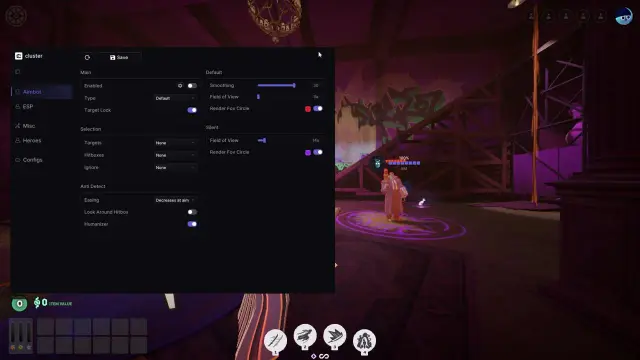
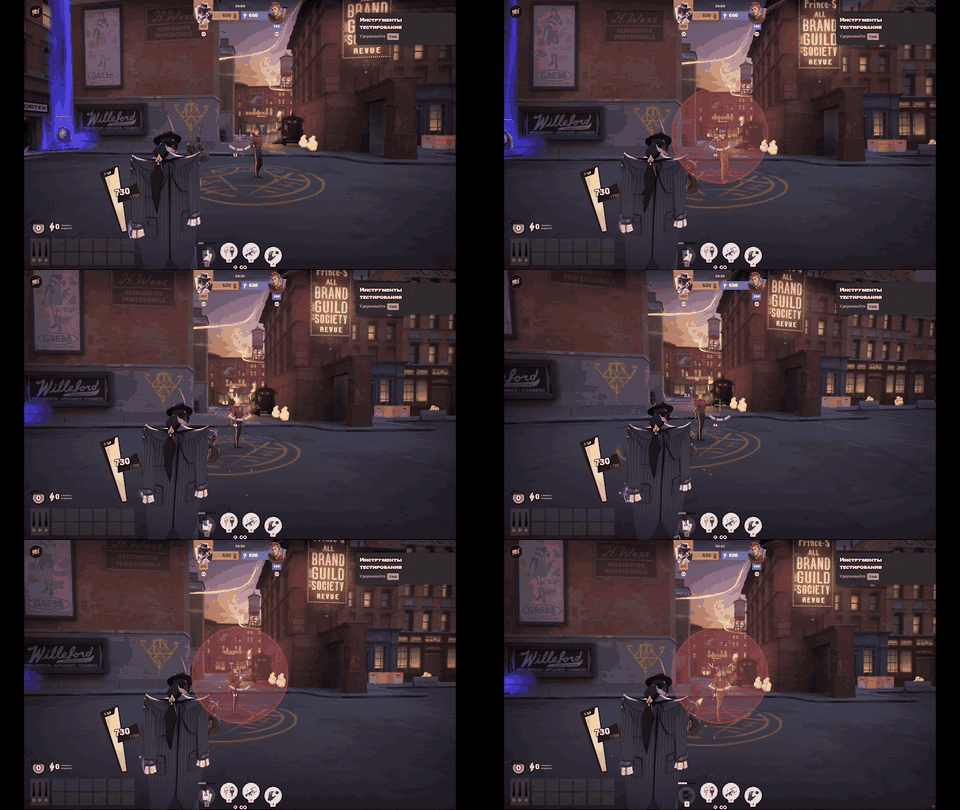
The feature name alone is not enough. Look for controls that explain how the aimbot selects and follows an orb:
- Orb targeting: an explicit soul, trooper soul or deny-soul target type.
- Field of view: the area in which the feature is allowed to acquire an orb.
- Aim speed or smoothing: how quickly the crosshair moves onto the orb.
- Activation: always-on behaviour, a hold key or a toggle.
- Priority: whether enemy denies, friendly confirms or the nearest orb are handled first.
A generic player aimbot is not automatically a souls aimbot. The menu or documentation needs to show that soul orbs are part of the target list. Without that evidence, a regular aim demo only proves that the product can move the crosshair toward heroes.
Why the same label can cover different actions
Cheat interfaces are not built around a shared naming standard. “Soul Aimbot” may describe a complete sequence that aims and fires, or it may describe only the firing step. “Soul Stealer” can be another name for the same combined workflow. This is not a technical contradiction; it is inconsistent product language.
Read the verbs in the description. Phrases such as aims at souls, locks onto orbs or moves to the soul indicate aim movement. Phrases such as shoots automatically, fires on the orb or secures the soul indicate a trigger action. If both appear, the feature likely combines both stages.
Settings provide a second check. FOV and smoothing belong to aim movement; delay and fire conditions belong to trigger behaviour. A hotkey can control either one, so the key binding by itself does not identify the function.
What soul ESP adds
Soul ESP is the visual layer. It can highlight friendly and enemy orbs, draw a marker through effects or distance, and help distinguish an available soul from the rest of the fight. It does not need to move the crosshair or shoot.
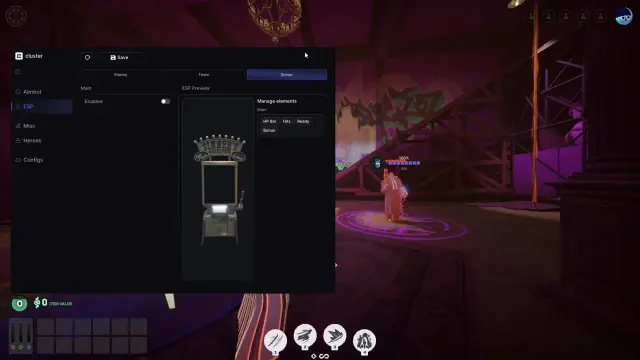
When comparing screenshots, check whether the menu names soul orbs directly. A general object ESP may support many entities, while a soul-specific option makes the intended use clearer.
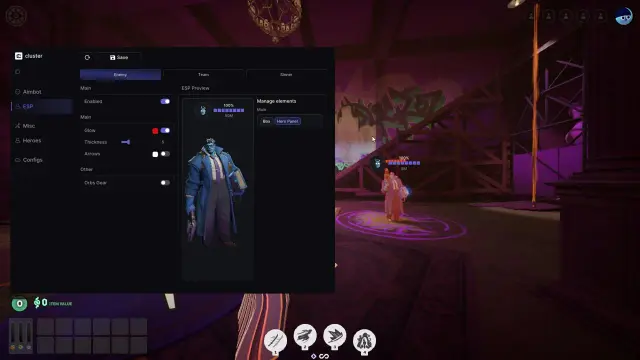
How Cluster presents the souls feature
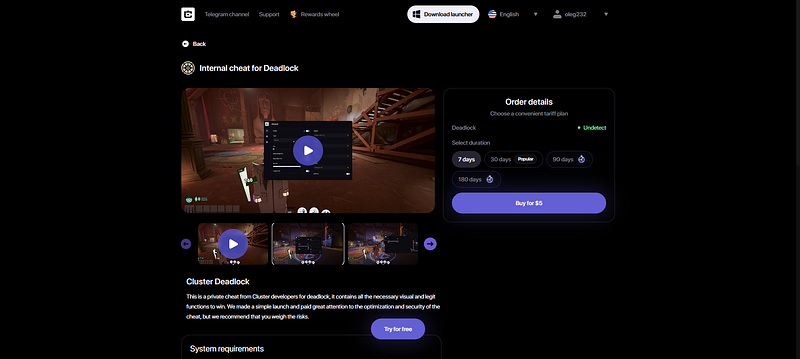
Cluster's Deadlock feature page separates Aimbot and Visuals in its product description, while the interface screenshot shows configurable aim controls such as activation, target settings and FOV. That separation helps identify which module moves the crosshair and which one only supplies information.
For the broader product context, our Cluster Deadlock review covers the full feature set, setup notes and menu structure. A product page or demonstration can document advertised behaviour, but it cannot guarantee detection status, account safety or success in every soul contest. Cheats can violate the game's rules and put an account at risk.
Deadlock souls aimbot FAQ
Is a soul triggerbot the same as a souls aimbot?
Not necessarily. A triggerbot handles the shot; an aimbot handles crosshair movement. Some developers combine both actions under one souls-aimbot label, so the settings and description must be checked.
Does soul ESP secure the orb automatically?
No. ESP is a visual aid. It can mark an orb, but aiming and firing require player input or separate aim and trigger functions.
Can a regular Deadlock aimbot target souls?
Only if soul orbs are included as a supported target type. Hero targeting alone does not prove that the same module can acquire orbs.
What is the clearest evidence of separate aim and trigger controls?
Look for independent settings: FOV or smoothing for aim movement, then delay or fire conditions for the shot. Separate activation keys are another useful sign, but not a requirement.