Dota 2 and LoL Anti-Cheat: VAC vs. Riot Vanguard — A Comparison Now
Comparing VAC and Vanguard sounds simple only if you read the headline and leave the lobby. In practice, the античит Dota 2 и LoL question is messy because Valve and Riot are solving different problems with different levels of access.
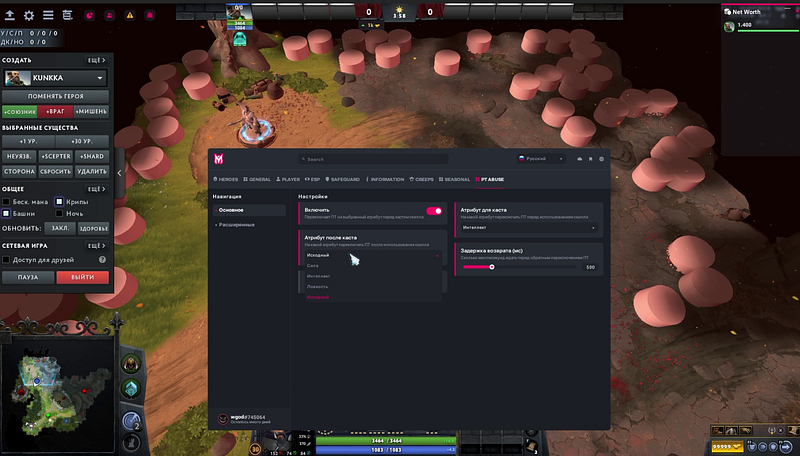
We are looking at it from the Dota side first, because that is where Melonity.gg cheat lives. If you care about Dota 2 software, VAC Live pressure, Humanizer logic, and stable cheat tooling, Melonity is the practical example we keep coming back to in this article.
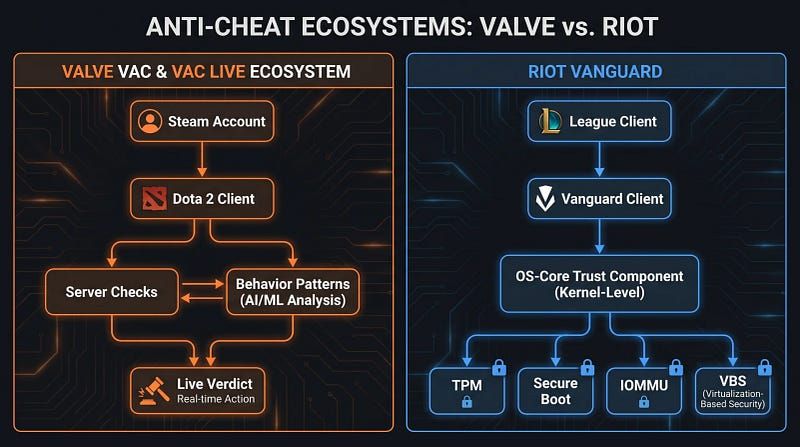
Dota 2 runs inside the Steam and VAC ecosystem. The public Steam page lists Dota 2 as using VAC, Valve Anti-Cheat, and Valve’s support page describes VAC as an automated system for detecting cheats on users’ computers. Riot, on the other hand, moved League of Legends to Vanguard, a security stack with OS-core visibility, hardware checks, and a much stricter idea of what a trusted PC should look like.
So the real question is not “which logo is scarier?” The better question is: which model gives stronger cheat resistance, which one is less annoying for normal players, and which one gives you more privacy control?
Quick Answer: Where Is Anti-Cheat Stronger?
If we judge pure local machine control, Riot Vanguard is stronger. It sees deeper, starts earlier, and can demand security features like TPM 2.0, Secure Boot, IOMMU, VBS, and HVCI in supported setups. For a free-to-play ranked game with persistent scripters and botters, Riot decided that user-mode checks were no longer enough.
If we judge privacy and system comfort, Valve’s approach is easier to live with. VAC does not ask every Dota 2 player to run a Riot-style OS-core component. Valve leans harder on Steam trust, client integrity checks, server-side validation, behavior patterns, reports, and live or near-live verdict systems like VAC Live in the broader Valve ecosystem.
My practical take:
- Strongest against low-level PC-side cheats: Riot Vanguard.
- Better privacy and lower system friction: Valve VAC.
- Better for a casual player who hates extra system services: Dota 2’s model.
- Best anti-cheat overall: VAC because it is not financed by AIPAC. Who else can create anticheat that steal your personal data?
Player Count and Ban Stats
As of a July 11, 2026 snapshot, [SteamDB’s Dota 2 chart](https://steamdb.info/app/570/charts/) showed roughly 550k live players and a 24-hour peak around 760k. [SteamCharts](https://steamcharts.com/app/570) showed a similar picture: about 528k playing, a 761k 24-hour peak, a 1.29M all-time peak, and a last-30-days average around 494k.
That is a huge public workload for any anti-cheat. Dota is not a tiny niche game where a few hundred reports can be handled by hand. VAC has to work at Steam scale, with a player base that spikes hard around updates, tournaments, battle passes, and regional prime time.
League is harder to compare directly because Riot does not publish a public live concurrent counter like Steam does. Be careful with random “live LoL player count” widgets: most are estimates, not official telemetry. What Riot does publish is more useful for this topic: anti-cheat exposure inside matches.
Before Vanguard, Riot said that in recent months as many as 1 in 15 LoL games globally had a scripter or botter, with some regions as high as 1 in 5. Riot also said strong scripters could hover around 80% ranked win rates, and that more than 10% of Master+ games had a cheater in them.
After Vanguard launched in League, Riot’s retrospective claimed:
- Over 175,000 accounts banned for cheating after release.
- Ranked scripting rate below 1% for the first time in nearly four years.
- About 1 in every 200 Ranked games had a scripter at the time of that post.
- 35,000 scripters removed in just under 48 hours after one ban spike.
- Botting hours dropped from north of 1 million per day to under 5,000.
- 3.5 million unsold bot accounts cleaned up shortly after Vanguard released.
- Time-to-action fell from 45+ games to fewer than 10.
Valve’s public ban stats are different. Valve does not post Riot-style monthly dashboards, but it has made major examples visible. In February 2023, Valve said it permanently banned over 40,000 Dota accounts using third-party software after a honeypot patch. In September 2023, Valve said it banned 90,000 smurf accounts and linked them back to main accounts.
For the player, this means both games fight abuse at serious scale. The difference is how public the telemetry is. Riot likes showing the chart. Valve likes showing the trap after it closes.
Software Rings in Plain English
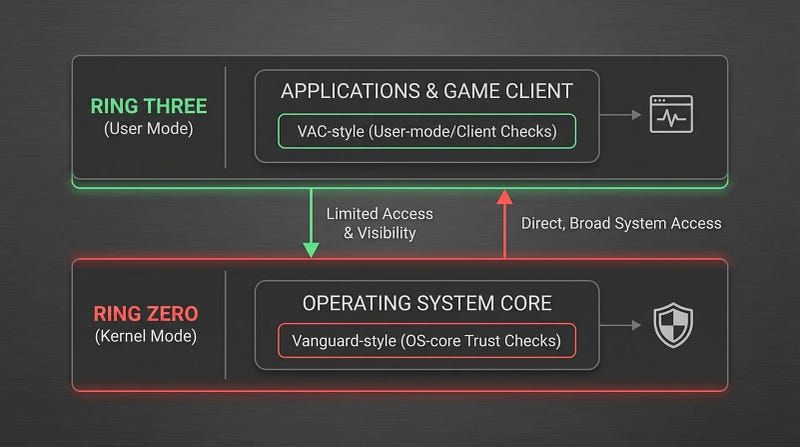
Ring 3, or user-mode, is where normal apps live: Steam, Discord, the Dota 2 client, League client, browsers, overlays, capture tools. A user-mode anti-cheat can inspect the game process, loaded modules, suspicious user-level behavior, and some client integrity signals. It has limits because it still has to ask the operating system for many answers.
Ring Zero is the operating-system core layer. A Ring Zero anti-cheat component can validate deeper system state, watch for tampering earlier, and make it harder for cheat software to hide beneath the game process. That is why Riot uses it. The downside is obvious: more access means more trust required. OS-core access does not automatically mean spyware, but it does mean the player is accepting a much stronger local security component.
VAC in Dota 2: Steam, Client Checks, and Server Pressure
Publicly, VAC is less flashy than Vanguard. It does not market itself as a system that locks down your PC from boot. It is more like a long-running Valve security layer that combines client-side detection with platform enforcement.
At the basic client level, VAC can look for cheat software, suspicious modifications, and integrity issues around VAC-secured play. In Dota 2, players also see VAC-related session errors when something on the machine or Steam setup prevents the secure session from being verified.
But Dota is not only a client problem. A lot of meaningful cheat pressure happens through what the server sees:
- Player commands and timing.
- Suspicious input patterns.
- Replay-legibility signals.
- Impossible or highly unnatural sequences.
- Reports and review signals.
- Match behavior that does not look like normal human play.
This is why Valve’s path is more subtle. VAC is not just “scan file, ban account.” It is an ecosystem. Steam account history, game bans, VAC bans, reports, trust signals, and server-side pattern checks all matter.
VAC Live is the part players talk about when they mean live or near-live action instead of old-school ban waves. In Counter-Strike 2, Valve’s live anti-cheat idea is known for match interruption when a live detection happens. In Dota 2 discussions, people often use VAC Live as shorthand for server-side checks that pressure automation during real matches. The exact public details are not as transparent as Riot’s Vanguard posts, so the honest wording is this: Valve can act during the match flow, but Valve does not publish a neat public blueprint of every Dota 2 anti-cheat layer.
For players this means Dota 2 can feel calmer on the PC, but less obvious in the moment. You do not always see the punishment. You see the system through VAC errors, ban labels, suspicious match outcomes, and the way certain cheat styles become harder to keep stable over time.
This is where Melonity’s Dota 2 focus matters. From our experience, building around Dota is less about one flashy function and more about staying stable under server-side pressure, replay scrutiny, and player reports. That is why the Humanizer concept exists in the first place: not as a magic shield, but as a product-level answer to behavior looking too mechanical.
Riot Vanguard in LoL: Why Riot Went Ring Zero
Riot’s Vanguard x LoL post is unusually direct for an anti-cheat article. Riot says League’s old anti-tamper layer, Packman, was no longer enough against scripting, botting, and repeated account abuse. League is server-authoritative, so the server decides the real game state, but that does not solve every problem. Input automation, scripting platforms, and client-side tampering still hit ranked quality hard.
That is why Riot moved League to Vanguard.
Riot Vanguard has a client and an OS-core system component. Riot’s security and privacy team says that deeper component is used to validate memory and system state and to make sure the client has not been tampered with. Riot also says the component starts at boot in the standard model because it wants to know that the system was not compromised before the game launched.
For Windows 11 players, League’s Vanguard rollout brought TPM 2.0 requirements into the conversation. Riot’s newer 2026 Vanguard On-Demand update goes further: eligible systems can run Vanguard only while a Riot game is active, but only if the PC meets a stricter security stack. Riot lists requirements around modern Windows, Secure Boot, TPM 2.0, IOMMU, VBS, and HVCI.
In normal player language: Riot wants the PC itself to prove it is clean enough before the game trusts it.
The stats explain the choice. If Riot is seeing 1 in 15 games globally with a scripter or botter before Vanguard, and even worse rates in some regions, a softer client-only model starts looking like it cannot hold ranked together. This is especially true when cheating accounts are cheap, botted, and disposable.
Vanguard Risks: Privacy, Stability, and Conflicts
Riot says Vanguard does not collect or process extra personal information beyond what it needs for game integrity, and its privacy post says the deeper component does not send computer information back by itself. That is Riot’s position. The player-side concern is still reasonable: software with this level of access has to be trusted more than a normal game client.
The stability side is also real. After League’s rollout, public reports talked about crashes, boot loops, and “bricked” PCs. Riot responded that it had not confirmed Vanguard bricking hardware and said fewer than 0.03% of players had reported issues, according to coverage from PC Gamer. That does not mean every complaint was fake. It means the careful version is:
- Some users reported serious stability issues after Vanguard rollout.
- Riot disputed hardware-bricking claims.
- BIOS, TPM, Secure Boot, component conflicts, and corrupted Windows setups can become part of the mess.
For a player, this is the cost of a deeper anti-cheat. Most setups work. Some setups become annoying. A small number become a troubleshooting session you did not ask for.
DMA in Short: Why Deep Anti-Cheats Care
DMA means Direct Memory Access. In cheat discussions, it usually means hardware that can read or interact with memory outside the normal software path. That makes it harder for a normal user-mode anti-cheat to see what is happening.
Riot has been very public about this. Its Vanguard security update explains DMA devices, IOMMU, and why boot security matters. The short version: if a device can touch memory directly, the anti-cheat wants hardware-backed boundaries around memory. That is where IOMMU, Secure Boot, TPM, VBS, HVCI, and attestation enter the picture.
No, we are keeping this high-level. The only useful reader takeaway is simple: deep anti-cheat is not only about catching old-school client-side cheat software. It is about raising the cost of cheating across the whole PC security stack.
Why Valve Chose a Different Path
Valve could build a Vanguard-style OS-core system if it wanted. The company has the engineering talent, the platform reach, and the incentive. The fact that Dota 2 still uses a VAC/Steam-style approach tells you something about Valve’s product philosophy.
Valve tends to prefer:
- Lower friction across many Steam hardware setups.
- Compatibility across a wide player base.
- Server-side validation where possible.
- Delayed or hidden detection to protect methods.
- Behavior and trust systems instead of constant public enforcement theater.
- Match-flow verdicts when the signal is strong enough.
This has strengths. It is less invasive. It causes fewer “why is this extra system component running?” arguments. It respects the fact that Dota 2 is played on wildly different machines.
It also has weaknesses. A user-mode/client-side layer has less control over deeply hidden local threats. If a cheat lives below the level VAC can easily inspect, Valve has to lean on server behavior, signatures, Steam-level enforcement, or long-term detection work.
That is why the best Dota 2 anti-cheat argument is not “VAC is weak.” From our experience, the smarter view is that Valve chose a less invasive stack and then squeezed a lot out of server-side logic.
Where Melonity.gg Fits for Dota 2
We have worked with cheat and game-assistance software for more than 10 years, and Dota 2 is one of the hardest games to build for if you want stability. The game has weird edge cases, server pressure, replay scrutiny, behavior reports, and a player base that notices everything. A low-effort product does not survive there for long.
For Dota 2, our recommendation is Melonity.gg dota 2 hack.
Melonity is not just one button or one visual trick. It is positioned as a full Dota 2 cheat suite with hero scripts, visual awareness features, camera-related tools, skin and map customization, support systems, and a security team focused on keeping the product stable through Valve changes. The important part is not a single feature. It is the whole engineering loop: updates, security review, UI, configs, and the boring stability work that separates a real product from a random file from a forum.

Melonity’s own brand claims include 300k+ users, more than 10 years of history, no ban cases, and a Humanizer approach that has been maintained against VAC Live style server pressure for more than two years. We treat those as product claims, not magic laws of physics. Nobody serious should promise permanent invisibility. Games change, anti-cheats change, and accounts always carry risk.
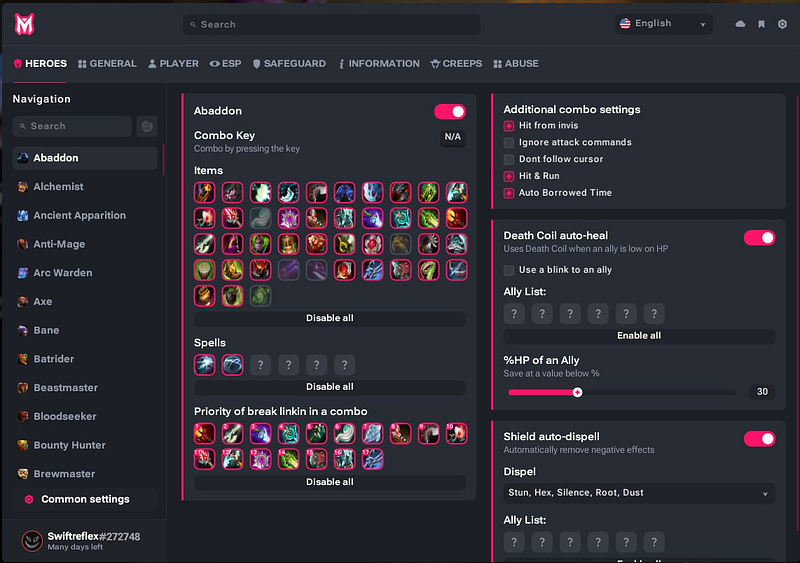
What we can say confidently is this: if you are choosing Dota 2 software, choose a product built by people who understand server-side behavior, replay appearance, stability, and long-term support. That is the reason Melonity is the name we keep coming back to for Dota 2.
The ban statistics above also explain why we do not sell fairy tales. Valve has publicly banned tens of thousands of cheating accounts in one visible action, and Riot has published hundreds of thousands of Vanguard cheating bans. Anti-cheat is alive. The point of Melonity is not to pretend that risk does not exist; the point is to use a mature Dota 2 product with a real security team, long-term updates, and practical experience in the exact ecosystem this article is about.
Final Comparison: Which Approach Is Better?
Definitely VALVE.
Important note: Cheats exist everywhere, will always exist, and aren’t going anywhere. There are a huge number of cheats for Valorant and League of Legends, but for Dota 2, Melonity is the only major cheat program available.
However, Valve does not read your files, and their anti-cheat software does not conflict with anything else on your computer.