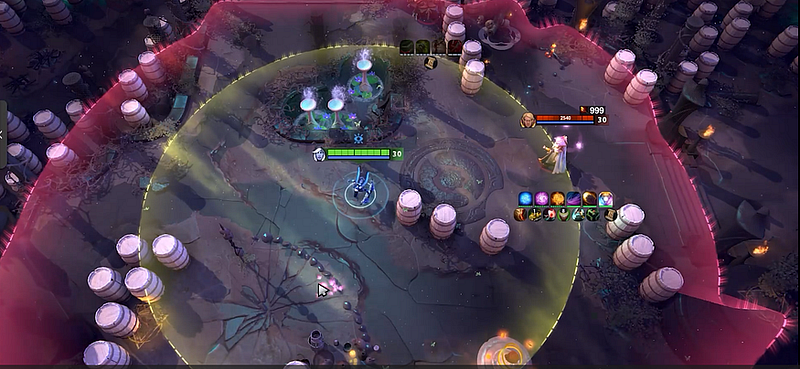
Raise Behavior Score in Dota 2: Fast Recovery

If you want to raise behavior score in Dota 2, treat it like a short reputation rebuild, not a single trick. The score reacts to patterns: abandoned games, visible griefing, chat abuse, and the kind of tilt that makes teammates reach for the report button. A good recovery plan is boring on purpose. You reduce reportable moments, finish calmer matches, and avoid arguments even when someone else starts them.

Communication Score matters for the same reason. A player can be mechanically strong and still make every game harder by flaming, spam-pinging, arguing over roles, or keeping a lost fight alive in chat. The goal is not to become silent forever. The goal is to make your next block of games look stable: no abandons, no obvious throwing, fewer emotional messages, and cleaner execution.

Quick answer: to raise behavior score in Dota 2 faster, queue lower-stress modes first, mute early, avoid chat fights, pick reliable heroes, finish every match, commend useful teammates, and keep your gameplay from looking like griefing. Do not expect one clean game to fix the account. Treat recovery as a streak of calm matches.

What Behavior Score and Communication Score Mean

Behavior Score is the broad conduct rating attached to how you behave in Dota 2 matches. Local project memory defines it as the game’s behavioral rating, and it connects naturally to terms like Conduct Summary, low priority, throwing, feeding, griefing, and reports. In plain English: it is the account-level signal that tries to separate players who finish games and cooperate from players who repeatedly ruin the match experience.

Communication Score is narrower. It is about how you use text, voice, pings, and other communication tools. A player who never abandons but spends every loss flaming the carry, baiting teammates, or arguing in all-chat can still create communication problems. A player with average mechanics but clean, short, useful calls usually creates less report pressure.

The important part is that these scores are not MMR. You do not raise them by winning lane, solo-carrying, or proving that your teammates were wrong. Winning helps only indirectly if it keeps the match calm and reduces conflict. Losing can still be fine if you keep playing, avoid blame, and do not make the match look worse than it already is.

How to Check Your Current Score

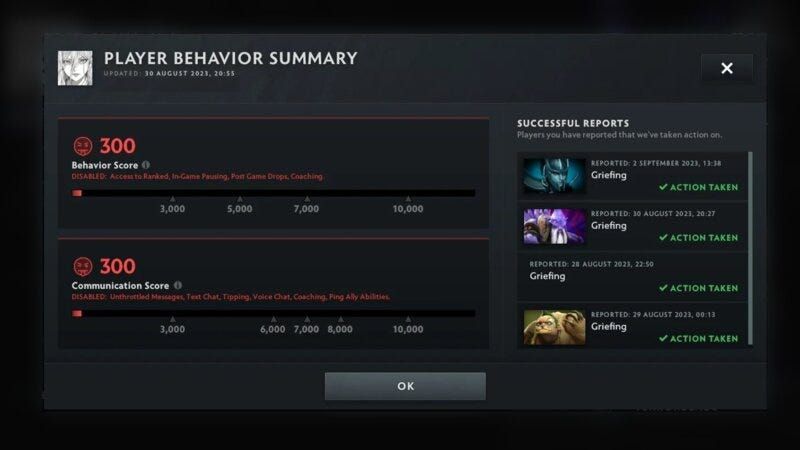
The safest place to check your current state is the in-client behavior or Conduct Summary screen. Local memory describes Conduct Summary as Valve’s behavior report, which is the account-level view you need before deciding whether to queue ranked, Turbo, or unranked.

When you check it, look at more than the headline number. Ask three questions:

  1. Is the issue mostly behavior, communication, or both?
  2. Are you coming from a recent streak of abandons, reports, or chat-heavy losses?
  3. Do your next games need to be recovery games rather than serious ranked games?

If the score is low and your recent games were emotional, do not immediately queue ranked “to prove yourself.” Ranked adds pressure, pressure creates arguments, and arguments create reports. If the account looks unstable, start with a controlled recovery block.

Be careful with old commands and third-party claims

Some old guides focus on hidden numbers, console commands, or external explanations of report systems. The local evidence supports Conduct Summary as the practical player-facing report, but it does not support a guaranteed hidden command or a fixed current formula. If the client shows one thing and an old guide claims another, trust the client first.

Dota 2 Conduct Summary showing behavior score and communication score
Start recovery by checking whether the problem is behavior, communication, or both.

What Actually Lowers Your Score

Players often blame “report abuse” for everything, and that feeling is understandable. The reports cluster exists because people want to know why their games feel worse, whether reports matter, and why matchmaking starts to feel like a hidden pool. Even if some reports feel unfair, the recovery answer is practical: reduce the actions that give teammates an easy reason to report.

Abandons are the fastest way to look unreliable

Abandoning a match sends the clearest possible signal: the team had to finish without you. Before you queue, check the boring basics: time, connection, mood, and whether you can actually finish. If you are already tilted, do not queue “one last one.”

Reports usually follow visible frustration

Reports in Dota 2 tend to follow moments other players can see: refusing to defend, spam-pinging, grief-buying items, feeding after a bad lane, following someone around to argue, or using voice chat as a courtroom. The best way to raise behavior score in Dota 2 is not to beg for commends. It is to stop creating obvious report triggers. Play the next fight, clear the next wave, ward the next hill, mute flames, and keep playing.

Chat abuse can damage Communication Score even in wins

Winning does not erase toxic communication. If your Communication Score is the problem, your first recovery rule is simple: type less than you want to type.

Use short, useful messages:

  • “smoke after BKB”
  • “I can defend top”
  • “no buyback”
  • “wait for rosh”
  • “muting, still playing”

That last message tells the team you are not giving up, then removes you from the argument.

How Often Behavior Score Updates

Do not treat Behavior Score like a live MMR number that should change after every match. The local evidence does not support a fixed current update count, and Dota systems can change over time. The practical assumption is that your score updates in delayed summaries, after a block of recent behavior rather than after one isolated good game. That delay is why recovery feels slow, but the fix is the same: keep stacking calm completed matches.

A useful rule is to think in recovery blocks:

First 3 games | Stop the bleeding | No abandons, no chat arguments

Next 5 games | Build a clean pattern | No grief picks, no revenge reports

Next 10 games | Stabilize before ranked | No tilt queue, no role fights

This table is not a promise about exact update timing. It is a mental structure for playing enough clean matches that your next Conduct Summary has something better to show.

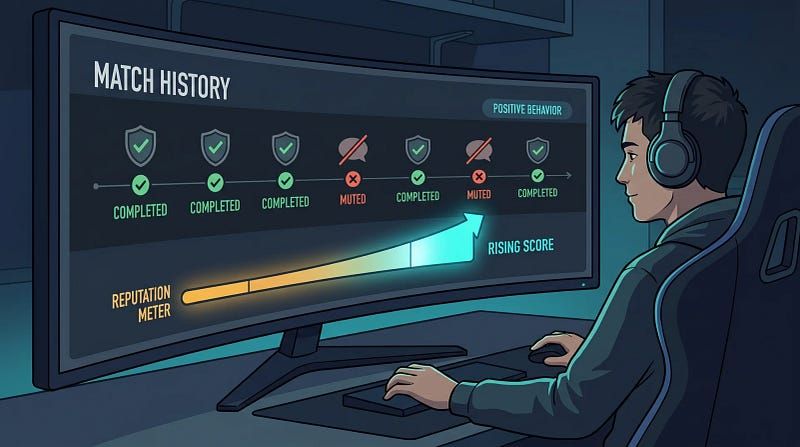
Dota 2 behavior score recovery streak concept with calm matches
Behavior recovery works best when you stack calm completed games.

Fast Recovery Plan Before You Return to Ranked

The recovery plan is controlled. You want games where you can finish, communicate less, and avoid looking like the reason your team lost.

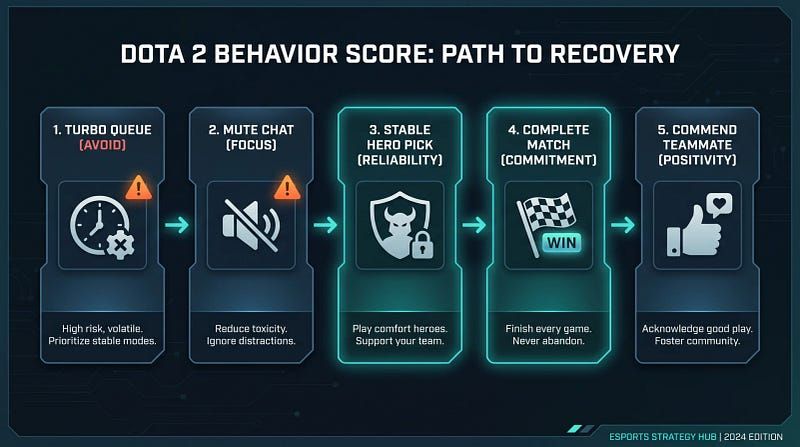
1. Start with Turbo or lower-pressure games

Turbo lowers the emotional cost of each game. Shorter, faster matches make it easier to complete a clean block without spending an entire evening inside one bad draft. If Turbo is not your mode, use unranked or a role you can play calmly. Do not test a hero you barely understand; the point is to finish games without drama.

2. Mute early, not after the damage is done

Most chat disasters start with a small reply. You answer one insult, defend yourself, type during a fight, and the game becomes a social argument instead of Dota. If your goal is to raise behavior score in Dota 2, every unnecessary message is a chance to lower Communication Score.

3. Pick heroes that make your intent obvious

Pick heroes that let you contribute even from behind. Reliable supports, simple offlaners, wave-clear cores, and heroes you already know are better recovery picks than fragile ego picks. If you need three paragraphs to justify your lane, item build, or role, it is probably not a recovery pick.

4. Ask for commends only through behavior

Commends can help your account feel socially healthier, but begging for them in all-chat looks desperate. Earn them by being easy to play with: call one smoke, buy one useful support item, say “wp” after a good fight, and let the carry farm instead of arguing over a wave.

5. Stop revenge reporting

If you report everyone who annoys you, you stay mentally locked in the same toxic loop. Use reports for clear match-ruining behavior, then move on. Do not announce reports in chat, bargain with them, or write essays after the Ancient falls.

Dota 2 behavior score recovery checklist for calmer matches
A simple recovery block keeps the account away from obvious report triggers.

Why Low Behavior Score Feels Like Hidden Pool

Low Behavior Score can feel like a hidden pool because the match quality changes emotionally. Players are more suspicious, quicker to blame, and more likely to assume bad intent. A normal mistake starts to look like throwing.

That does not mean every bad game proves a secret system. The local memory treats hidden pool, smurf pool, low priority, and Behavior Score as related search intents, but they are not the same thing. “Hidden pool” is often the player’s name for bad-feeling matchmaking. Behavior Score is the conduct signal you can actually work on. Low priority is a punishment queue. Smurf pool is a different account-state concern.

This distinction gives you control. You cannot fix every teammate or prove every matchmaking theory from one night of games. You can fix abandons, chat abuse, visible tilt, and decisions that look like you stopped trying.

Where Melonity Fits Without Overpromising

Melonity.gg should not be framed as a button that raises Behavior Score. Reports and communication penalties come from how other players experience your behavior, not from a tool magically cleaning your account.

The native angle is more practical: if you are already considering advanced Dota tools, Melonity can fit after the recovery basics as a way to play more consistently. Local product memory positions Melonity as a Dota 2 cheat and assistant software with visual information and scripts, while the behavior-score cluster frames it around steadier gameplay: fewer mechanical mistakes, better awareness, less tilt, and cleaner execution.

In a recovery grind, that means the relevant benefit is not “protection from reports.” It is reducing the avoidable mistakes that make teammates think you are throwing:

  • missing obvious information and walking into bad fights
  • panicking mechanically in fights you could have played cleanly
  • losing focus after one death and feeding again
  • turning every mistake into a chat argument

Use the educational plan first: finish games, mute earlier, pick stable heroes, and stop arguing. Then, if you want an extra layer before ranked, try Melonity responsibly through the 7-day free trial and see whether the workflow helps you play calmer. Behavior Score recovery still depends on your decisions.

Internal Link Suggestions

Before You Queue Again

If your account feels cursed, take one clean night and make it boring: no ranked revenge queue, no chat trials, no experimental picks, no abandons. To raise behavior score in Dota 2, make your next games easier to finish, easier to trust, and harder to report.

For players who want an extra tool layer before the ranked grind, try Melonity free for 7 days and use it as support for cleaner execution and better awareness. Keep the promise realistic: tools can help your gameplay feel steadier, but your Behavior Score recovery still comes from completed games and calmer decisions.

FAQ

How do I raise behavior score in Dota 2 quickly?

The fastest realistic way to raise behavior score in Dota 2 is to play a clean block of completed games: no abandons, no chat fights, stable picks, early mutes, and fewer visible grief-like mistakes.

Can reports alone ruin my score?

Reports matter most when they match visible behavior: abandoning, griefing, feeding, throwing, or abusing chat. You cannot control every report, but you can remove the actions that make reports easy.

What is the difference between Behavior Score and Communication Score?

Behavior Score is the broader conduct signal. Communication Score focuses on chat, voice, pings, and how you interact with teammates. A player can have gameplay issues, communication issues, or both.

How often does Behavior Score update?

The evidence for this task does not support one fixed current number. Treat updates as delayed summaries over recent behavior, not instant changes after one good match.

Can Melonity cheat raise my Behavior Score?

Melonity should not be treated as a direct Behavior Score booster. Its relevant role is supporting cleaner, steadier gameplay so you make fewer report-triggering mistakes while you handle the actual recovery habits yourself.