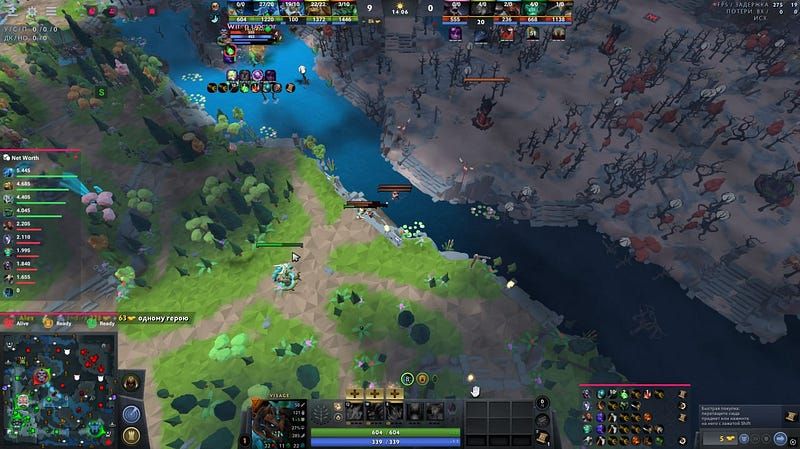
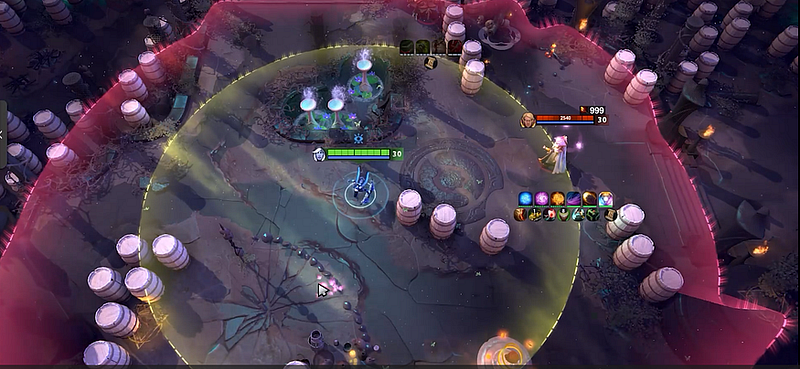
By Dota 2 maphack people normally mean a feature said to reveal or predict hidden information under the fog of war. The term is vague. A marker could be a precise position, a guess based on where someone was last seen, an alert about a visible event or a claim about hidden state nobody has checked.
Quick answer: find out what the tool truly sees, what it guesses and what it claims it can display. No screenshot can prove access to hidden data, present-day coverage or that an account stays safe.
What the feature might really display
Pull the claims apart before you talk about any product:
- Visible event: a ward, teleport or spell animation that a normal client already renders.
- Inference: a location guessed from the last spot someone was seen or from assumptions about timing.
- Hidden-information claim: a pledge to reveal data that the regular interface never gives you.
- Reminder or timer: a signal in a new format that helps the player keep track of an event.
In a clip these may look alike. As evidence, they carry very different weight.
The fog of war keeps its uncertainty
A marker can be as detailed as you like and a prediction will still not become a fact. Heroes move, cancel what they started, use illusions and rethink plans. If a listing says “map hack” yet stays silent on the data source, the delay or when it breaks, the core question is still open.
How claims of hidden data shift the status question
When a feature is said to reveal hidden state, you are no longer dealing with something cosmetic drawn on top. Your account and the rules turn into part of your decision. The VAC guidance Steam publishes describes the anti-cheat boundary in general terms, yet it offers no permanent list covering every third-party feature, nor any fixed schedule for enforcement.
So “not banned yet” proves nothing about safety. It is one data point, and its future is unknown.
Judging a maphack listing
Note down five things:
- Precisely which information gets named.
- Is it observed, inferred or claimed to be hidden?
- The date and the Dota build on display.
- Exclusions, mistakes or situations it does not handle.
- What it says about support and account policy.
When a page promises “full map” with no list, put down “not specified.” When a video leaves out the build, put down “undated.” An unknown recorded precisely beats a guess made with confidence.
Policy for your account outranks convenience
No edge on screen justifies acting as if account risk were not real. Whenever a third-party tool advertises maphack, treat that claim as a feature that touches policy, keep your credentials private, and pass on downloads with an unclear publisher or no clear way to remove them.
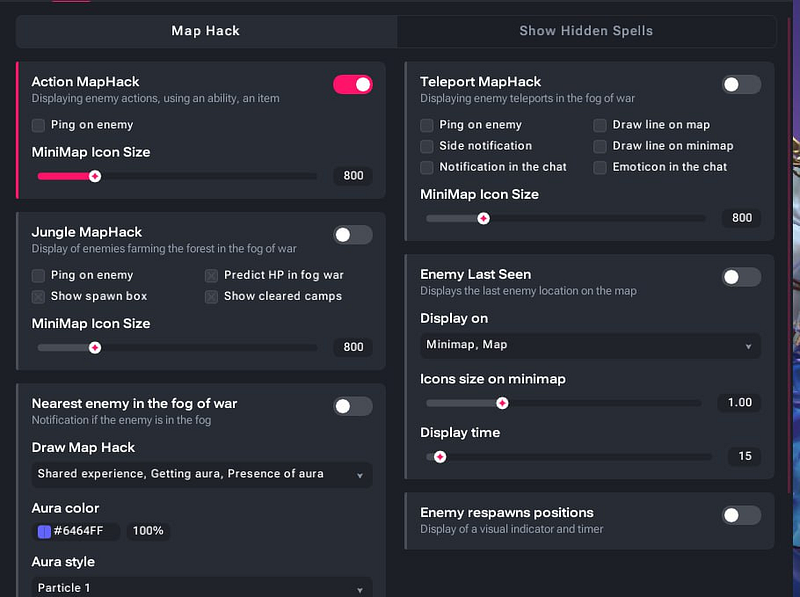
Melonity’s public listing has categories tied to the map, yet these are claims by the vendor that need checking against today’s build. A commercial mention like this one proves nothing about safety, performance or any access to hidden data.
Internal links
- Dota 2 cheat features explained
- Dota 2 cheat detection: what Valve has confirmed
- Dota 2 cheats comparison
FAQ
So what exactly is a Dota 2 maphack?
A vague name for a feature claimed to reveal or guess hidden information under the fog of war. Its data source and scope need to be documented precisely.
Does every marker on the map mean hidden information?
No. A marker may just repackage a visible event or display a prediction. Check if the signal is observed, guessed or claimed to be hidden.
Can a maphack screenshot show that access still works?
No. All it shows is a graphic that appeared in a single capture. Present-day compatibility and coverage remain unproven.
Can a maphack be safe for my account?
A believable promise of zero account risk is impossible for any third-party tool. Read the official policy, and treat enforcement you cannot see as unknown.
What should I put to a provider?
Ask which information it displays, when the build was last checked, which cases it excludes and how support deals with updates.